
Most businesses think the first agency call is where the project begins. In reality, the project often succeeds or fails before that call even happens. Understanding how to brief a web development agency properly before the first conversation can significantly improve project outcomes and agency recommendations.
A vague briefing process creates vague proposals, unclear timelines, unrealistic expectations, and expensive misunderstandings later. On the other hand, businesses that prepare properly usually receive better recommendations, more accurate pricing, stronger strategic direction, and smoother project execution.
This is especially true when hiring a web development or digital marketing agency in India. Whether you are planning a website redesign, ecommerce platform, SEO campaign, or long-term growth strategy, the quality of your initial briefing directly affects the quality of the outcome.
An agency brief is a document or preparation framework that explains your business goals, project requirements, timelines, expectations, and success metrics before discussions begin with an agency partner.
For Indian startups, SMEs, SaaS businesses, and ecommerce brands, preparing properly before the first call saves time, reduces confusion, and helps agencies provide solutions that actually fit the business.
Why briefing a web development agency properly matters
Many agency relationships struggle because businesses jump into execution conversations before defining the actual problem.
An unclear briefing process often leads to:
- Incorrect project estimates
- Misaligned expectations
- Delayed timelines
- Scope creep
- Weak marketing outcomes
- Poor communication during delivery
A strong brief creates alignment early. It helps both sides understand priorities, constraints, and business objectives before discussing solutions.
This becomes even more important for businesses investing in web development services or long-term digital growth retainers, where execution may continue for months or years.
Step 1: Define your business goals before discussing deliverables
Most agencies do not need a detailed technical explanation during the first call. They need clarity around business goals.
Many businesses make the mistake of saying:
“We need a new website.”
That does not explain the actual problem.
A stronger briefing approach would sound like this:
“We are getting traffic but low-quality leads.”
“Our ecommerce conversion rate is declining on mobile.”
“We want to position ourselves as a premium brand.”
“We need better visibility.”
The clearer the business objective, the better the agency can recommend the right strategy.
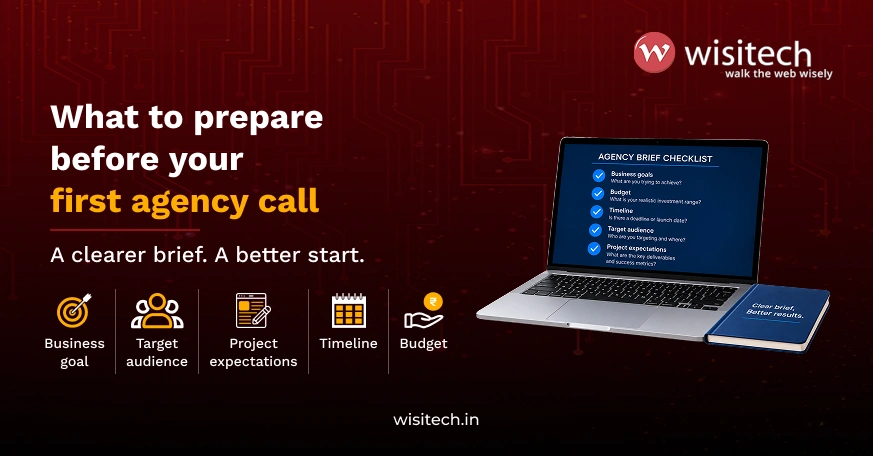
Before the first call, define:
- Your primary business challenge
- What success looks like
- Why the project matters now
- Internal pressure points or deadlines
- Existing marketing or operational issues
Step 2: Know your budget and timeline
A good web development agency cannot recommend the right approach without understanding budget expectations.
This does not mean you need an exact figure immediately. But businesses should at least define a realistic investment range.
In India, many projects become delayed because companies avoid discussing budgets upfront while expecting enterprise-level execution.
Your first call should include clarity around:
| Area | Questions to Prepare |
| Budget | What investment range is realistic? |
| Timeline | Is there a launch deadline? |
| Internal approvals | Who signs off on decisions? |
| Project urgency | Is this growth-driven or reactive? |
Businesses should also decide whether they prefer:
| Engagement Type | Best For |
| Project-based | One-time website builds |
| Retainer-based | Ongoing marketing or support |
| Hybrid model | Development + long-term optimization |
An experienced web development company will usually guide the discussion more effectively when budget and timeline expectations are transparent from the beginning.
Step 3: Document your target audience clearly
Many businesses explain what they sell but fail to explain who they are selling to.
This creates major problems in website structure, messaging, SEO strategy, UX decisions, and ad targeting.
Before speaking with an agency, define:
- Your ideal customer profile
- Industry or audience segment
- Geographic target markets
- Customer pain points
- Buying behavior
- Decision-making process
For example, an ecommerce brand targeting Tier-2 Indian cities requires a different website and marketing approach than a SaaS company targeting enterprise buyers in Bangalore or Mumbai.
This information helps agencies recommend the right positioning, design direction, and acquisition strategy.
Step 4: List your required deliverables and success metrics
Businesses should know what they expect the agency to deliver.
This sounds obvious, but many first calls remain overly abstract.
A better approach is to outline expected deliverables clearly.
| Deliverable | Success Metric |
| Website redesign | Better lead conversion |
| SEO campaign | Higher qualified traffic |
| Ecommerce optimization | Increased sales |
| Landing pages | Improved ad conversion |
| Technical fixes | Faster performance |
This is particularly important when working with agencies offering custom web development services because project scope directly affects pricing, timelines, and technical planning.
Success metrics should focus on business outcomes, not just design preferences.
Step 5: Prepare reference materials before the call
One of the fastest ways to improve an agency conversation is to prepare examples beforehand.
Helpful references may include:
- Competitor websites
- Websites you admire
- Existing brand guidelines
- Marketing reports
- Current analytics data
- Existing SEO or ad performance
- Technical documentation
This gives the agency better context and reduces unnecessary back-and-forth discussions later.
Step 6: Prepare questions to ask the agency
The first call should not feel like an interview where only the agency asks questions.
Businesses should evaluate the agency as carefully as the agency evaluates the project.
Useful questions include:
- What similar projects have you handled?
- How do you structure communication?
- Who will manage the project?
- How do you handle revisions and scope changes?
- What happens after launch?
- How do you measure success?
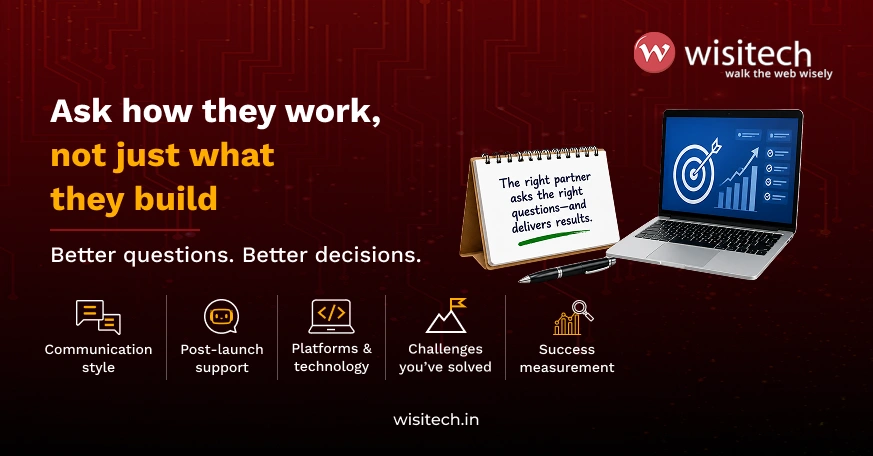
- What tools and platforms do you recommend?
- What challenges do you foresee?
These conversations reveal far more about an agency than polished sales presentations.
Red flags to watch for during agency discussions
Many businesses focus heavily on pricing while overlooking operational warning signs.
Some common red flags include:
- Unrealistic guarantees
- Extremely vague timelines
- No discovery process
- Generic proposals with little customization
- Poor communication during early discussions
- Lack of strategic questioning
- Overpromising without understanding the project
Strong agencies usually ask detailed questions before discussing execution.
That is often a positive sign, not a delay tactic.
How Indian businesses should approach agency relationships today
The Indian digital market has matured significantly. Businesses are no longer simply looking for vendors. They are looking for accountable execution partners.
That shift changes how briefing should work.
The best agency relationships today are collaborative. Businesses that prepare thoroughly before the first call usually receive:
- Better strategic recommendations
- More realistic project timelines
- Stronger execution quality
- Clearer pricing structures
- Better long-term alignment
This applies whether the business is hiring a digital marketing team, a web application development company, or a full-service growth partner.
Conclusion
The first call with a web development agency should not begin with design discussions or pricing negotiations. It should begin with clarity.
Businesses that prepare goals, budgets, audience insights, expectations, and success metrics beforehand usually build stronger agency relationships and avoid costly misalignment later.
For Indian businesses investing in web development, SEO, or digital growth, the briefing process is not administrative paperwork. It is the foundation of the entire project.
Wisitech works with startups, SMEs, ecommerce brands, and growing businesses to create structured, strategy-driven digital solutions aligned with real business goals. Contact us today to discuss your project requirements and prepare for a more productive agency engagement process.
Disclaimer: The recommendations, workflows, timelines, and agency preparation strategies discussed in this article are general guidelines intended for informational purposes only. Actual project requirements, budgets, and engagement processes may vary depending on business size, industry, technical complexity, and marketing objectives.