

Most Indian businesses invest heavily in building a website, but far fewer invest in maintaining it properly after launch.
That creates a dangerous gap.
A website may look perfectly functional on the surface while quietly developing security vulnerabilities, broken integrations, outdated plugins, slow-loading pages, SEO issues, and compatibility problems behind the scenes. Many business owners only start considering website maintenance services in India after rankings drop, inquiries slow down, or customers begin complaining about issues that could have been identified and fixed earlier.
This is why website maintenance services are no longer optional for serious businesses. Website maintenance refers to the ongoing process of keeping a website secure, updated, functional, optimized, and aligned with changing technical requirements.
For Indian businesses operating in competitive digital markets, ongoing support is not simply about fixing bugs occasionally. It is about protecting business continuity, customer trust, and long-term digital performance.
long-term digital performance.
What should website maintenance services in India include?
- Regular security updates and vulnerability monitoring
- Website backups and recovery systems
- Speed and performance optimization
- Uptime monitoring and issue resolution
- Plugin, CMS, and server updates
- SEO health checks and technical fixes
- Payment gateway and API maintenance
- Mobile responsiveness testing
- Ongoing technical support and troubleshooting
What is website maintenance?
Website maintenance is the ongoing management of a website to ensure it remains secure, updated, stable, and fully functional over time. This includes monitoring performance, fixing technical issues, applying updates, improving security, and ensuring compatibility across devices and browsers.
For Indian businesses, maintenance often also includes handling hosting-related issues, payment gateway updates, WhatsApp integrations, multilingual functionality, and SEO-related technical improvements.
A website that is not actively maintained slowly becomes less reliable, less secure, and less effective as a business asset.
Why website maintenance matters for Indian businesses
Many Indian businesses still treat websites as one-time projects instead of long-term digital infrastructure.
That approach creates problems quickly.
A neglected website may experience:
- Security breaches
- Broken forms or checkout flows
- Slower loading times
- Search ranking declines
- Mobile usability problems
- Downtime during traffic spikes
- Plugin conflicts after software updates
For ecommerce businesses, even a small technical issue can interrupt sales completely. For service-based businesses, broken inquiry forms may silently reduce leads for weeks before anyone notices.
Indian businesses are also increasingly dependent on integrations such as Razorpay, WhatsApp APIs, CRM systems, and third-party automation tools. These systems frequently release updates that require compatibility monitoring and technical adjustments.
Without proper maintenance, small technical problems eventually become expensive operational issues.
What should website maintenance services include?
Many businesses pay for maintenance without fully understanding what ongoing support should actually cover.
A proper maintenance plan should include the following areas:
Security updates and monitoring
Security is one of the most critical aspects of website maintenance.
This includes:
- CMS and plugin updates
- Malware scanning
- Firewall monitoring
- Security patch implementation
- Login protection
- SSL monitoring
Businesses using outdated software become easier targets for attacks and data breaches.
Website backups and recovery
Reliable backup systems ensure websites can be restored quickly if something fails.
Good maintenance plans include:
- Automated backups
- Cloud backup storage
- Recovery testing
- Disaster restoration support
Performance optimization
Website speed naturally degrades over time if performance is not monitored actively.
Maintenance should include:
- Speed optimization
- Image compression
- Database cleanup
- Broken script removal
- Cache management
This is particularly important for ecommerce and high-traffic business websites.
Uptime monitoring
Downtime often goes unnoticed until customers report issues.
Maintenance teams should monitor:
- Website uptime
- Server health
- Error logs
- Traffic anomalies
- Hosting stability
Technical support and troubleshooting
Businesses need quick technical assistance when problems occur.
Ongoing support may include:
- Bug fixing
- Form troubleshooting
- Mobile responsiveness fixes
- Browser compatibility adjustments
- Plugin conflict resolution
This is where experienced providers offering web development services create long-term value instead of only offering one-time development.
Website maintenance frequency: What should happen and when
Different maintenance tasks should occur at different intervals.
| Task | Frequency |
|---|---|
| Security monitoring | Daily |
| Backups | Daily or weekly |
| Plugin and CMS updates | Weekly |
| Performance checks | Monthly |
| SEO technical audits | Monthly |
| Full security audits | Quarterly |
| Hosting and infrastructure reviews | Annually |
Websites that are updated irregularly often accumulate hidden technical debt over time.
Website maintenance cost in India
Website maintenance pricing depends on complexity, traffic volume, integrations, and business requirements.
| Maintenance Level | Estimated Monthly Cost | Suitable For |
|---|---|---|
| Basic Maintenance | ₹3,000 – ₹8,000 | Small business websites |
| Standard Maintenance | ₹8,000 – ₹20,000 | Growing startups and ecommerce |
| Advanced Maintenance | ₹20,000+ | Enterprises and SaaS platforms |
Businesses investing in custom web development services often require ongoing technical support to manage integrations, performance, security, and evolving functionality as their digital operations grow.
What is a website AMC in India?
In India, many businesses prefer AMC-based support models.
A website AMC, or Annual Maintenance Contract, is an agreement where businesses pay a fixed recurring fee for ongoing technical support, updates, monitoring, and maintenance services.
A good website AMC typically includes:
- Security updates
- Technical support hours
- Backup management
- Performance monitoring
- Bug fixing
- Emergency issue resolution
For many businesses, AMC structures provide predictable support costs and faster issue handling.
Website maintenance by business type
Different businesses require different maintenance priorities.
Ecommerce websites
Ecommerce maintenance should focus heavily on:
- Payment gateway compatibility
- Checkout functionality
- Inventory integrations
- Mobile performance
- Traffic handling during sales periods
SaaS businesses
SaaS platforms usually require:
- API monitoring
- Application uptime management
- Database optimization
- Version compatibility testing
- User authentication security
Businesses working with a web application development company often require structured maintenance workflows for long-term scalability.
Enterprises
Enterprise websites typically need:
- Multi-level security management
- Server infrastructure monitoring
- Compliance updates
- Internal system integrations
- Performance scaling support
Startups
Startups should focus on maintaining stability while scaling gradually.
Even smaller startups benefit from proactive maintenance because technical problems can affect investor perception and customer trust.
How to choose a website maintenance company in India
Choosing the right support partner matters as much as the maintenance itself.
Look for a provider that offers:
Technical expertise
The company should understand CMS platforms, hosting environments, APIs, and modern development frameworks.
Fast response times
Downtime and technical issues require quick resolution.
Transparent maintenance scope
Businesses should clearly understand what services are included in the maintenance agreement.
Scalability support
Maintenance needs increase as businesses grow.
An experienced web development company should support future scalability instead of only reactive troubleshooting.
What happens if you do not maintain your website?
Many businesses delay maintenance because the website appears functional initially.
The risks usually emerge gradually:
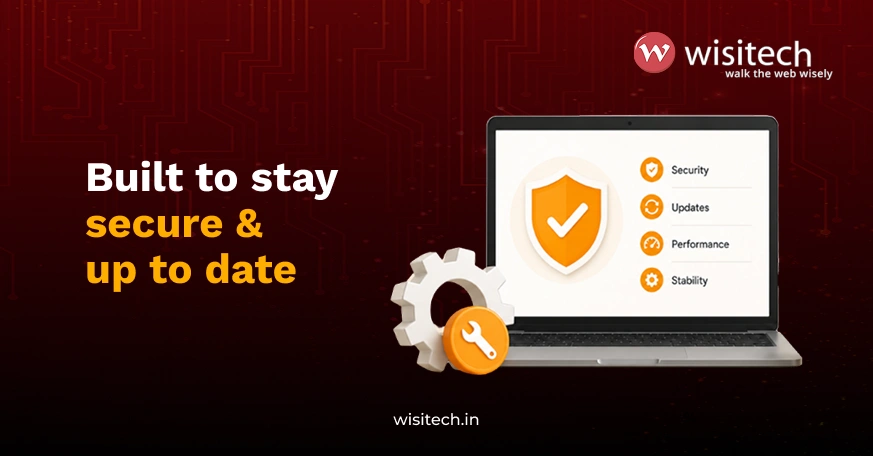
- Increased security vulnerabilities
- Lower SEO rankings
- Slower website performance
- Broken integrations
- Poor mobile usability
- Customer trust issues
- Revenue loss during downtime
Website maintenance is often invisible when done correctly. But its absence becomes highly visible when problems begin affecting users.
Conclusion
A business website is not a one-time project that can be ignored after launch. It is a continuously evolving digital asset that requires regular monitoring, optimization, updates, and technical support.
This is why website maintenance services in India play such an important role in protecting website performance, search visibility, customer experience, and business continuity.
At Wisitech, we help Indian businesses maintain secure, stable, and high-performing websites through proactive monitoring, technical support, performance optimization, and long-term maintenance solutions. Contact us to learn how the right maintenance strategy can support your website’s long-term growth.
Disclaimer: The pricing ranges, maintenance frequencies, and operational recommendations mentioned in this article are general industry estimates intended for informational purposes only. Actual website maintenance requirements may vary depending on website complexity, traffic volume, integrations, hosting infrastructure, security requirements, and business goals.